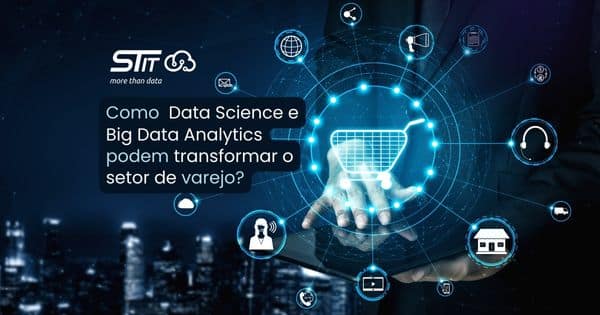
Data Science and Big Data Analytics: The Future of Modern Retail
In the competitive landscape of today's retail, the use of Big Data and Data Science has become an essential strategic resource. By harnessing the power of data, retailers are able to gain a comprehensive understanding of their customers, their purchasing habits, and their preferences. This understanding can then be used to make informed decisions on fundamental matters, from product assortment to pricing. But its applicability goes further.
In constant evolution, Big Data provides retailers with a constant stream of new information that can be used to refine their sales and marketing strategies. In simple terms, data is essential for retail success. Companies that fail to leverage Big Data will quickly find themselves at a disadvantage compared to their competitors.
Benefits of Big Data and Analytics in Retail
By collecting and analyzing large amounts of data using Big Data and Analytics, retailers are able to gain a deep understanding of the needs and preferences of their customers. This allows them to customize their products and services to better meet the needs of their target market. Additionally, Big Data can help retailers identify trends and anticipate future customer demands. As a result, they are able to make more informed decisions about inventory levels, marketing campaigns, and store operations. Big Data and Analytics are giving retailers a competitive advantage and helping them better serve their customers.
Practical Applications of Big Data and Analytics in Retail
Here are five practical ways Big Data and Analytics can be used in retail:
1 - Mapping Customer Preferences
Identifying key touchpoints can be used to improve the customer experience, ensuring that the right messages are being delivered at the right time.
2 – Tracking Customer Behavior
Tracking customer behavior across different channels helps identify patterns and trends that can be applied to predict future behavior.
3 – Customer Segmentation
Segmenting customers into groups based on their behaviors and characteristics allows more effectively targeting marketing campaigns and promotions.
4 – Interactions with Technology
Understanding how customers interact with technology, through website usage data or social media interactions, optimizes user experience and provides more personalized content.
5 – Social Media Monitoring
Monitoring social media channels to capture customer sentiment helps address any negative sentiment and improve overall brand perception.
Using Big Data and Analytics technology correctly, retailers can improve the effectiveness of their marketing campaigns, make more informed business decisions, and create a more personalized shopping experience for their customers. If your company wants to take its first steps with Big Data and Analytics in its retail business, be sure to look for a solution that has all the key features mentioned above.
Count on ST IT Cloud to Transform Your Data into Strategic Actions
Our team is available to help your company start or enhance the use of Big Data and Analytics. Contact us and find out more.
Talk to our specialist