Cloud adoption has consolidated a new paradigm for data-driven companies.
Modern architectures, Data Lakes, and advanced analytical solutions exponentially expanded the capacity to generate strategic insights.
However, as the volume, variety, and criticality of information grows, a central challenge emerges: how to ensure that data is reliable, secure, traceable, and scalable?
In this context, cloud data governance stops being a technical topic and begins occupying a strategic role.
More than control, this instrument becomes the foundation for reliable decisions, sustainable innovation, and regulatory compliance in increasingly complex corporate environments.
Why is data governance a pillar for data-driven companies?
Data-driven companies depend on information quality and reliability to guide operational and strategic decisions.
However, without a solid data governance structure, even the most modern environments tend to become fragmented, insecure, and difficult to scale.
According to the Global Report 2025 issued by Strategy, 38.3% of organizations already list governance structures and semantic layers as investment priorities.
This data reflects a clear mindset shift: it is not enough to collect and store data; it is necessary to ensure they are usable, comprehensible, and reliable throughout the organization.
Therefore, data governance acts as a link between technology, business, and compliance, sustaining the strategic use of information at scale.
Cloud data governance: more than control, a trust model
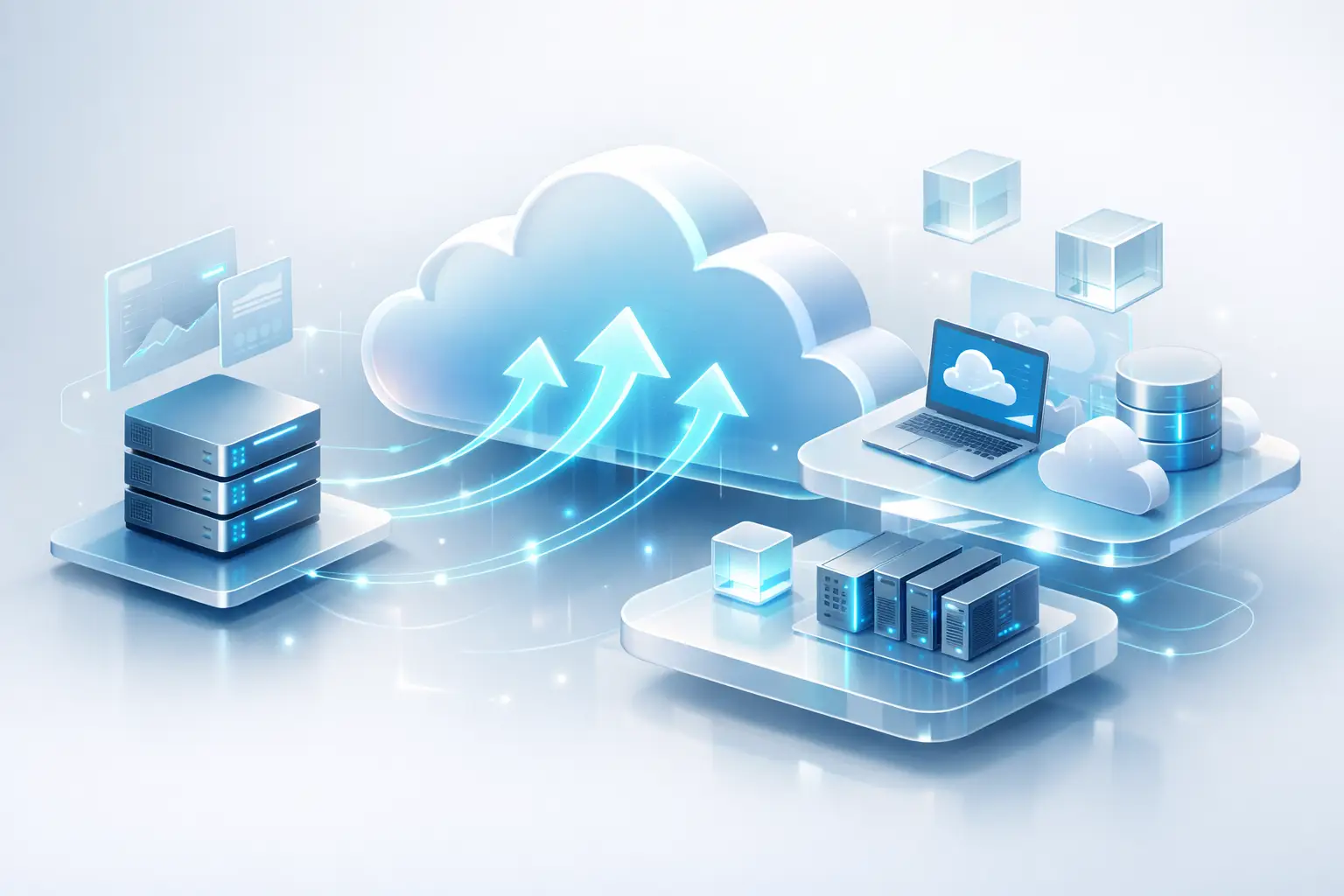
When migrating data to the cloud, many companies believe security and governance are automatically resolved by the provider's infrastructure.
Although platforms like AWS offer robust security resources, responsibility for cloud data governance is shared and requires well-defined architectural and operational decisions.
Governing data in the cloud means establishing clear rules about how data is collected, classified, accessed, transformed, and consumed.
It also involves creating mechanisms that ensure visibility, traceability, and consistency throughout the entire information lifecycle.
In corporate environments, especially those operating with critical data, this governance is what sustains confidence in indicators, analytical models, and automated decisions.
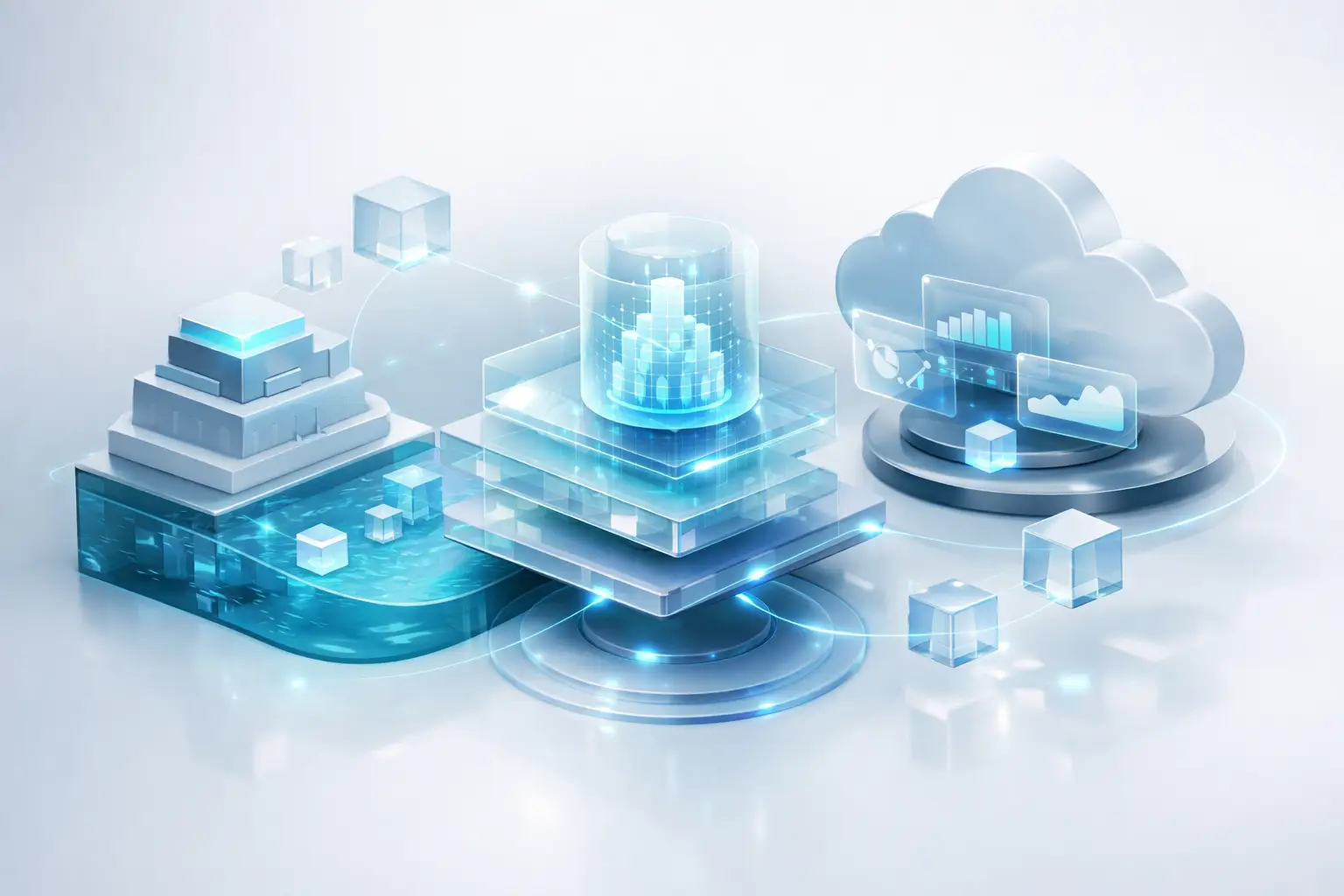
Reliable Data Lake: the foundation of modern architectures
The concept of a reliable Data Lake has evolved significantly in recent years. If before it was sufficient to centralize large data volumes, today the focus is on ensuring quality, context, and governance from ingestion through consumption.
Without well-defined policies, a Data Lake can quickly become a "data swamp", where information is difficult to locate, interpret, or validate. Therefore, data governance becomes indispensable for:
- Standardizing structures and nomenclatures;
- Defining data responsibilities (data ownership);
- Ensuring quality and continuous updating;
- Ensuring controlled and auditable access.
In practice, a governed Data Lake allows different company areas to consume data autonomously without compromising security or reliability.
The pillars of data governance in cloud environments
Data quality and consistency
Quality is the first data governance pillar. Duplicated, incomplete, or inconsistent data compromises analyses, AI models, and executive reports.
In cloud environments, automated pipelines allow continuously validating, enriching, and monitoring data.
Thus, governance ensures that information used in decisions reflects business reality, reducing risks and rework.
Data catalog and discovery
As environments grow, knowing which data exists, where it is, and how it can be used becomes a challenge.
Data catalogs are fundamental for documenting metadata, definitions, and lineage.
This pillar facilitates information access democratization while maintaining control and traceability, essential for regulated corporate environments.
Data security and access control
Data security is one of the most critical governance aspects in the cloud and involves everything from encryption at rest and in transit to granular profile and role-based access policies.
With governance policy application, it is possible to ensure each user or system accesses only the necessary data, reducing the risk surface and strengthening corporate security posture.
Data governance and compliance policies
Companies operating in regulated sectors need to meet rigorous data compliance standards, such as LGPD, GDPR, and specific audit requirements.
Cloud governance allows formalizing clear policies about retention, anonymization, classification, and use of sensitive data.
Furthermore, it facilitates generating evidence and reports for audits, reducing legal and operational risks.
Data traceability and lineage
Understanding a datum's origin, its transformations, and how it is used is essential for ensuring transparency and trust.
Traceability ensures that critical decisions can be explained and validated — something increasingly required in advanced analytics and artificial intelligence initiatives.
Governance as a scalability and innovation accelerator
Although many companies associate governance with bureaucracy, in practice it is one of the main scalability enablers.
By defining standards and automating controls, governance reduces friction and allows new projects to be implemented more quickly and safely.
In modern AWS architectures, for example, well-structured governance makes it possible to scale analytical environments, incorporate new data sources, and expand AI use cases without compromising performance or compliance.
Thus, governance and innovation stop being opposing forces and begin acting in a complementary manner.
ST IT Cloud's work in critical data projects
ST IT Cloud operates precisely at the point where governance, data architecture, and cloud computing meet. In critical data projects, the company adopts an approach that goes beyond technology, integrating strategy, security, and operations.
When designing architectures on AWS, ST IT Cloud structures reliable Data Lakes, defines business-aligned governance policies, and implements continuous control and monitoring mechanisms.
This model ensures data is not just accessible, but reliable, secure, and ready to scale as corporate demands evolve.
This experience translates into more resilient environments, more precise decisions, and greater return on data and analytics investments.
Cloud data governance as competitive differentiator
In the current scenario, the capacity to transform data into value is directly linked to governance maturity.
Companies that neglect this pillar face scale limitations, security risks, and loss of confidence in their own indicators.
On the other hand, organizations that invest in cloud data governance build a solid foundation for continuous innovation, intelligent automation, and responsible information use.
More than a technical requirement, governance consolidates as a competitive differentiator for companies that want to grow sustainably and data-driven.
Is your organization ready to elevate data maturity and accelerate Analytics, Machine Learning, and AI initiatives?
With the Cloud Laker and ST IT Cloud's specialization in data architecture on AWS, your company gains the technical, strategic, and operational foundation needed to transform data into real results, with scalability, governance, and automation throughout the value chain.
You might also like:
How is artificial intelligence elevating operational efficiency in companies?
How is Cloud Laker redefining data use with intelligent Data Lakes?