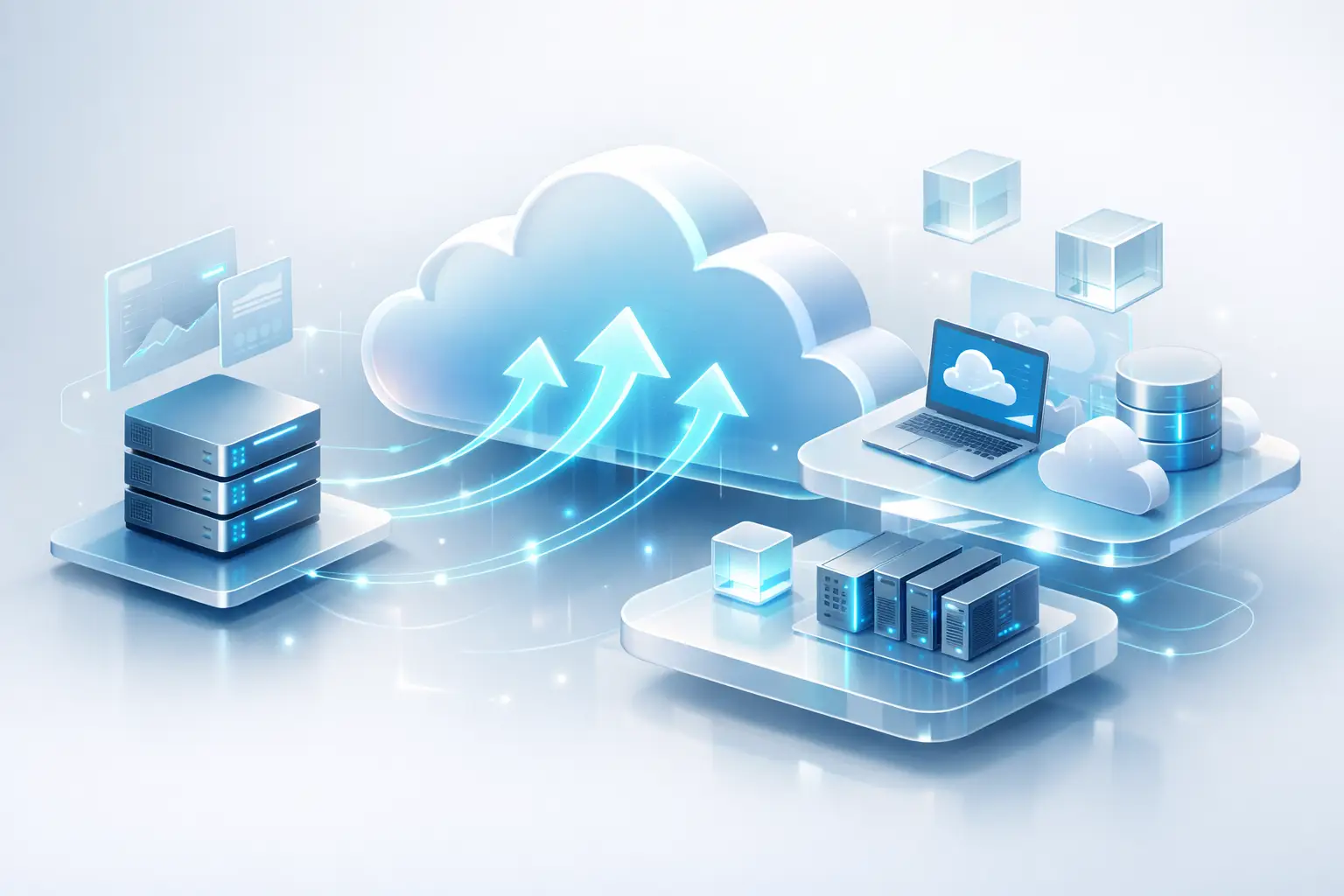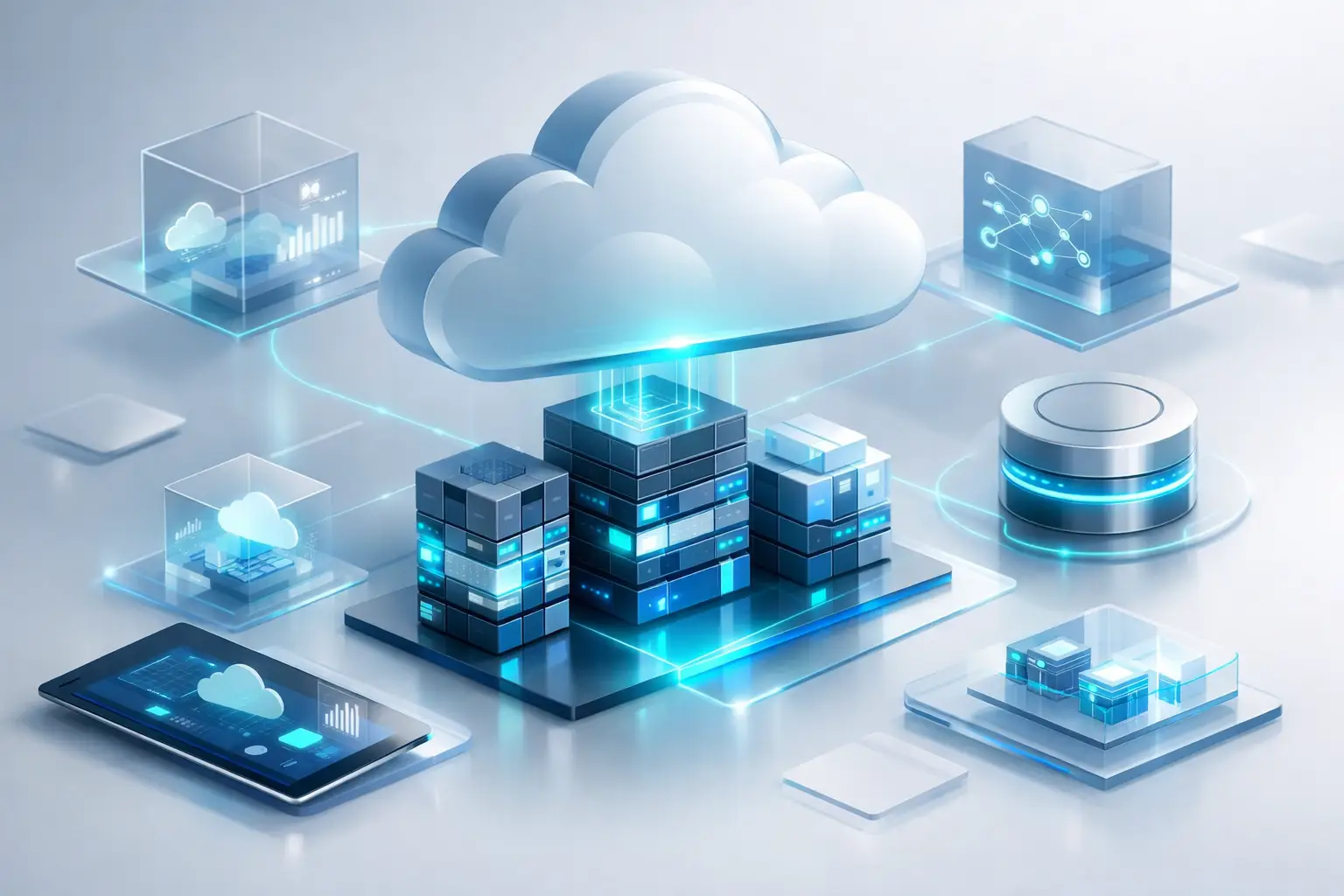
The pressure to reduce costs, gain agility, and sustain new data demands has already changed technology's role within companies. In this scenario, cloud infrastructure modernization has stopped being an isolated technical initiative and become a decision directly linked to operational efficiency, governance, and the capacity to grow without amplifying complexity in the same proportion.
For medium and large companies, the problem is rarely just migrating servers or applications. The critical point tends to be how to redesign the technological foundation to support data integration, automation, analytics, and corporate AI use without creating new bottlenecks. This is why modernizing infrastructure requires more than moving workloads to the cloud. It requires reviewing architecture, processes, security, and the operating model.
What cloud infrastructure modernization really means
Modernizing cloud infrastructure is not synonymous with exchanging a data center for a cloud provider. In practical terms, it means evolving legacy environments toward a more flexible, scalable, and governable architecture, prepared to respond quickly to business needs.
This modernization can involve updating monolithic systems, adopting managed services, restructuring networks, reviewing access policies, automating operational routines, and creating a more mature foundation for data and applications. In many companies, it also includes consolidating environments that have grown in a fragmented manner over time.
Value appears when infrastructure stops being a limiter. An operation that depends on manual processes, underutilized environments, and fragile integrations tends to consume more budget and deliver less predictability. A well-modernized cloud environment allows scaling with control, accelerating deliveries, and reducing exposure to operational failures.
Why so many initiatives fail before generating results
Much of the initiative failure happens because it starts with the tool, not the problem. The company chooses current technologies, contracts cloud resources, and migrates part of the environment, but maintains the same operational logic, the same silos, and the same fragility points.
Another common mistake is treating modernization as a short-term project. Some improvements can generate quick gain, but structural transformation requires a continuous agenda. There are dependencies between applications, critical business rules, regulatory requirements, and inherited limitations that need to be evaluated with criteria. Not every workload should be refactored at the same moment. Not every application needs the same level of elasticity.
There is also a governance factor. When the cloud grows without clear standards for provisioning, security, observability, and financial control, the result tends to be increased cost and loss of visibility. The cloud solves many problems, but amplifies others when architectural discipline does not exist.
Where modernization generates direct business impact
The most relevant benefits appear when infrastructure begins sustaining concrete gains, not just technical improvements. In operations with high data dependence, for example, modernization reduces the time to integrate sources, process larger volumes, and make reliable information available to BI areas, operations, and executive leadership.
In companies with demand peaks or accelerated expansion, the gain is in elasticity. Instead of oversizing the environment to handle exceptions, the operation starts adjusting resources more intelligently. This improves financial efficiency and reduces waste.
There is also an important impact on security and compliance. Modernized environments tend to offer better mechanisms for traceability, access segregation, encryption, and policy standardization. This does not eliminate risk, but reduces improvisation and improves response capacity.
For innovation areas, the effect is equally relevant. A modern foundation facilitates experimentation, integration with machine learning services, distributed processing, and data pipeline automation. When the technological foundation is well built, innovation stops depending on operational exceptions to happen.
How to structure a cloud infrastructure modernization strategy
The first step is understanding the starting point objectively. This includes mapping applications, databases, integrations, system dependencies, current resource consumption, criticality levels, and security requirements. Without this diagnosis, the company risks prioritizing the wrong assets or transferring inefficiencies to a new environment.
Technical diagnosis with business vision
A technical inventory alone is not enough. It is necessary to cross infrastructure information with business impact. Which systems affect revenue, customer service, logistics operations, compliance, or analytical intelligence? Which manual processes generate rework and hidden cost? Which workloads need high availability and which can be handled in later stages?
This reading helps define realistic priorities. In some cases, the best decision is to modernize the data layer first. In others, focus should be on critical applications or standardization of cloud operations.
Choosing the right model for each workload
Not every modernization requires deep refactoring. There are scenarios where a rehost makes sense for initial speed gain. In others, replatform or redesign delivers more value in the medium term. The decision depends on cost, urgency, risk, technical complexity, and expected return.
The mistake is applying the same strategy to the entire portfolio. Highly coupled legacy systems may require a gradual approach. More recent applications may evolve more quickly to service-oriented architectures, automation, and managed components.
Security, governance, and FinOps from the start
Modernization without governance tends to lose efficiency quickly. Therefore, identity and access policies, environment management, tagging, monitoring, backup, auditing, and cost control must be part of the foundation, not enter afterward as a correction.
This point is decisive for companies that need to scale with predictability. Well-defined governance reduces deviations, facilitates auditing, and creates a foundation for better consumption and performance decisions.
The role of data within modern infrastructure
In many organizations, the discussion starts with infrastructure, but the main gain comes from data maturity. It does not make sense to build a current cloud environment without considering ingestion, processing, storage, catalog, quality, and data availability for analytics and AI.
When infrastructure is thought of together with data architecture, the company reduces redundancies and improves flow between transactional systems, analytical pipelines, and visualization layers. This accelerates everything from operational indicators to more advanced cases of prediction, recommendation, and automation.
Services like distributed processing, pipeline orchestration, and management visualization operate better when there is a cloud foundation designed for scale, governance, and integration. This is where the cloud stops being just infrastructure and becomes an effective platform for value generation.
Trade-offs that need to be handled with maturity
Modernizing brings gains, but involves choices. Refactoring applications can increase long-term return, but requires more time, investment, and alignment between technical and business areas. Migrating quickly can reduce immediate operational pressure, but may preserve architectural limitations that will need to be resolved later.
Another point is change management. Modern infrastructure changes the routine of operations, development, security, and data teams. Without training, process, and clear responsibility definition, technology advances faster than operations can absorb.
It is also necessary to avoid the excessive complexity trap. The most sophisticated architecture is not always the most appropriate. The best design is the one that meets real requirements of scale, security, and performance without creating unnecessary dependence on difficult-to-sustain components.
What differentiates a successful modernization
Successful projects tend to have three characteristics. The first is clear alignment with business goals, such as operational cost reduction, availability increase, analytics acceleration, or productivity improvement. The second is execution in waves, with defined priorities and measurable gains along the way. The third is combination of architecture, data, and operations, avoiding isolated decisions.
This is where specialized consulting makes a difference. Companies like ST IT Cloud operate precisely at the intersection of strategy, engineering, and implementation, structuring environments prepared for data, automation, and sustainable growth. The value lies not just in putting operations in the cloud, but in transforming the technological foundation into measurable competitive advantage.
Cloud infrastructure modernization as a growth capability
The cloud conversation has matured. Today, the central question is no longer whether the company should modernize, but how to do it with control, priority, and concrete return. Modern infrastructure is not an end in itself. It is what allows operating with more intelligence, responding faster to the market, and sustaining data and AI initiatives without compromising security or governance.
When modernization is conducted with criteria, the company stops investing just to keep the environment running and starts investing to grow with consistency. This is the moment when technology stops being a reactive cost and takes on a more strategic role in generating efficiency and results.